


Key Takeaways
- This guide is for Placer County property managers and small business owners who need to evaluate whether a cleaning company can handle recurring commercial carpet cleaning, not just a one-time job.
- Commercial readiness is about fit: appropriate cleaning methods for the carpet and soil conditions, dependable scheduling, clear communication, proof of insurance, and a written scope of work.
- Strong commercial programs usually combine routine maintenance with periodic deeper cleaning rather than relying on one method for every area and every visit.
- Red flags include phone-only quoting without a walkthrough, vague scope, unrealistic dry-time promises, and no clear plan for entrances, hallways, or other heavy-traffic zones.
- Use the checklist and bid-review questions below to decide whether to hire, renew, or rebid your commercial carpet cleaning account.
Commercial Carpet Cleaning Accounts: What “Readiness” Really Means
If you manage an office in Rocklin, a medical suite in Roseville, or a small retail space in Lincoln, your carpet faces a level of wear most homes never see. Daily foot traffic brings in dry soil, parking-lot grit, seasonal dust, and the occasional spill. That kind of use usually calls for planned maintenance, not just occasional emergency cleaning.
Commercial carpet cleaning accounts are ongoing service relationships. They typically spell out scope, scheduling, methods, communication, and pricing for repeated visits over time. The core question for a property manager is simple: can this company reliably support a recurring commercial account, or are they set up mainly for residential jobs and trying to stretch into commercial work?
That distinction matters because commercial carpet care has to fit business operations. You may need after-hours access, consistent crew communication, documented service records, and methods that match different traffic zones across the building.
How Commercial Carpet Care Differs From Residential Work
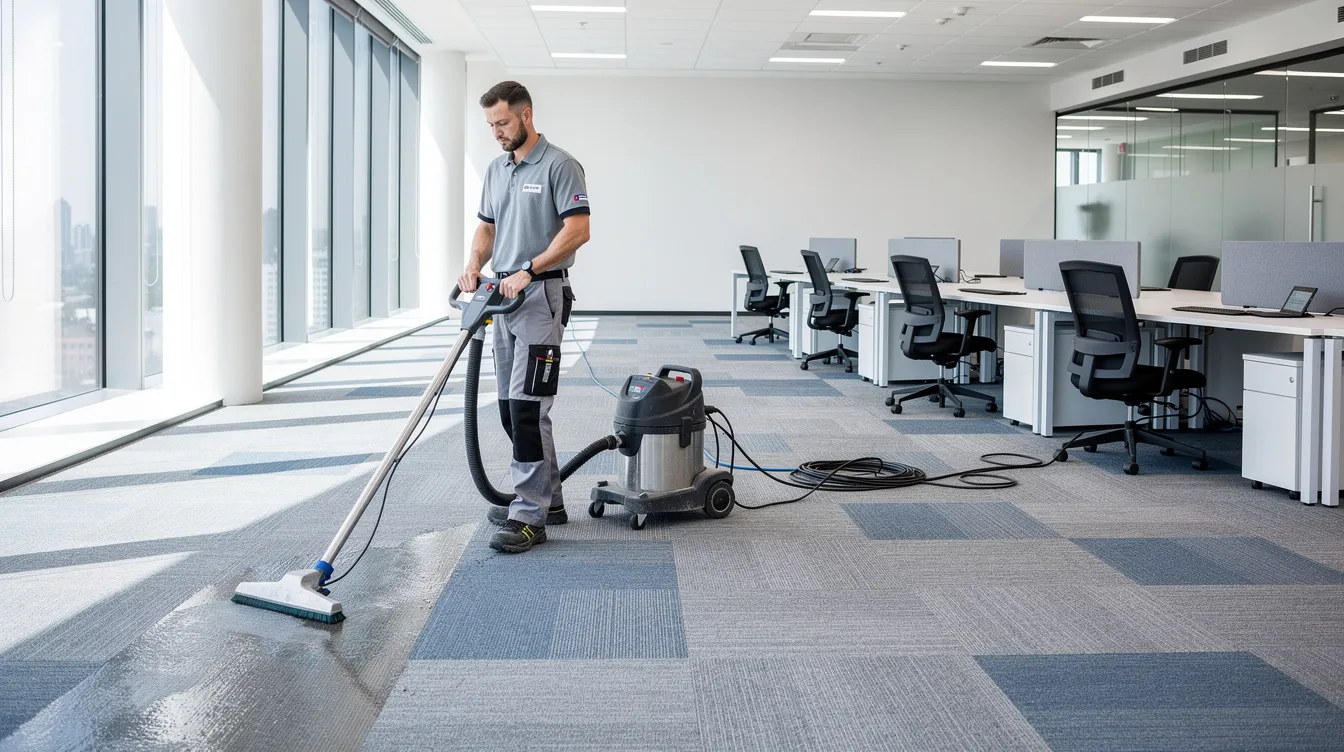
Commercial carpet cleaning is not just residential cleaning on a bigger floor plan. Industry guidance from the IICRC and the Carpet and Rug Institute recognizes carpet maintenance and cleaning as a structured professional process, and CRI emphasizes that proper cleaning is important to carpet life and appearance in offices and other commercial facilities.
For buyers, that means commercial work should sound planned and operational, not casual or reactive. A qualified provider should be able to discuss:
- How traffic patterns differ between entries, hallways, offices, conference rooms, and waiting areas
- How routine maintenance supports appearance and the useful life of the carpet
- How cleaning will be scheduled around occupants, security, alarms, and access restrictions
- How they will document what was cleaned, what method was used, and what follow-up is recommended
Commercial settings also bring broader indoor-environment concerns. EPA guidance for schools and office buildings highlights routine housekeeping, floor coverings, and cleaning activities as part of indoor air quality management, which is one reason many facilities prefer a regular maintenance plan instead of waiting until the carpet looks obviously dirty.
Core Capabilities Every Commercial Carpet Cleaner Should Have
Before awarding a recurring commercial carpet cleaning account anywhere in Lincoln, Rocklin, Roseville, or nearby Placer County communities, confirm these basics:
- Insurance and business readiness. Ask for proof of general liability coverage and confirm the company is prepared for commercial service requirements.
- Method range. A commercial provider should explain when low-moisture cleaning makes sense, when hot water extraction is more appropriate, and why your building may need both at different times.
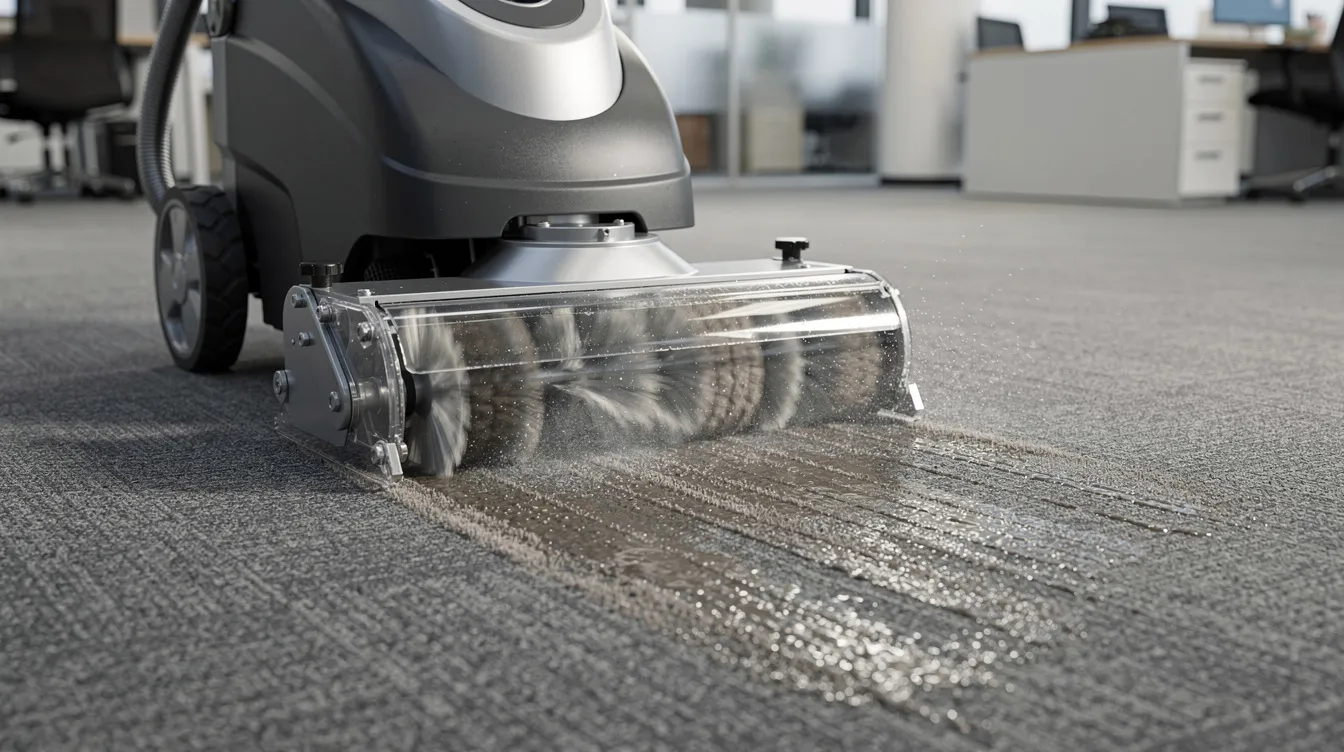
- Equipment that matches the job. Commercial work often calls for more than a basic extractor. Depending on the space, that can include truck-mounted extraction, low-moisture equipment, and agitation tools such as CRB machines.
- Scheduling flexibility. Many commercial buildings need evening, weekend, or phased cleaning so business operations can continue with minimal disruption.
- Trained crews and clear communication. The company should be comfortable discussing carpet types, soil conditions, spot treatment, drying expectations, and building access procedures.
- Written scopes of work. A proposal should define areas to be cleaned, service frequency, methods, access notes, and what is or is not included.
Method Fit Matters More Than Buzzwords
One of the easiest ways to tell whether a cleaner is ready for commercial carpet cleaning accounts is to ask how they choose a method. If every answer sounds the same for every building, that is a warning sign.
In many commercial settings, low-moisture methods work well for interim maintenance because they reduce downtime and help keep visible traffic lanes under control. Hot water extraction is often used for periodic deeper cleaning to remove more embedded soil. A capable provider should explain where each method fits in your building rather than pushing one process as the answer to every problem.
They should also be able to explain dry-time expectations honestly. The right answer depends on the method, airflow, carpet construction, humidity, and building conditions. Be cautious of blanket promises that sound too good to be true in every situation.
For a more detailed background on cleaning methods, Guardian has a separate guide to commercial carpet cleaning for offices and retail facilities. For this article, the main point is simpler: a commercial-ready company should match the method to the account, not force the account to fit the method.
What a Commercial Maintenance Plan Should Include
A strong maintenance plan is usually built around traffic zones and building use, not a single blanket schedule for every room.
Look for a proposal that addresses:
- Priority areas such as entries, main corridors, reception zones, and break rooms
- Routine vacuuming and spot-response expectations, whether handled in-house or by another vendor
- Interim maintenance for appearance control in heavy-use areas
- Periodic deeper cleaning for restorative care
- Access instructions, service windows, and on-site points of contact
- How the plan will be adjusted if occupancy, weather, or soil conditions change
This matters in Placer County because local conditions can shift what your carpet faces through the year. Dry summer dust, winter tracking, and occasional wildfire ash can change how quickly entry areas and hallways show soil. A provider who thinks in terms of zones and changing conditions is usually more prepared for recurring commercial work than one who treats the whole building like a single living room.
Questions to Ask Before You Award a Commercial Carpet Account
Use these questions during a walkthrough or bid review:
- How do you handle entrances, hallways, and other heavy-traffic areas differently from private offices?
- Which cleaning methods do you recommend for our carpet, and why?
- How do you reduce residue and rapid re-soiling?
- What is included in the quoted scope, and what would be billed separately?
- How do you coordinate after-hours access, alarms, or security procedures?
- How do you document completed work?
- What do you recommend for routine maintenance between deeper cleanings?
- Who will be our point of contact if something changes at the building?
- Can you show us what a maintenance plan for a building like ours looks like?
You do not need a vendor to give the exact same answer you would give. You do need them to give a specific, building-based answer rather than a generic sales script.
Signs a Cleaner Is Built for Recurring Commercial Accounts
Here are some positive signals that a company is equipped for ongoing commercial carpet cleaning accounts:
- They insist on a walkthrough before finalizing scope
- They talk in terms of zones, traffic patterns, and maintenance cycles
- They provide written recommendations rather than a vague verbal estimate
- They can work around business hours and access restrictions
- They keep service records, inspection notes, or other documentation
- They are comfortable reviewing the account periodically and adjusting the plan if the building’s needs change
From the buyer’s perspective, these habits usually make a recurring account easier to manage. You are not just hiring for cleaning skill. You are hiring for consistency, communication, and follow-through.
Red Flags That a Provider Is Not Commercial-Ready
Keep this list nearby when you compare bids:
- They quote entirely by phone without seeing the space
- They cannot explain the difference between routine maintenance cleaning and deeper restorative cleaning
- They make unrealistic promises about dry time or results without asking about building conditions
- They do not ask about traffic patterns, operating hours, or access procedures
- They resist putting scope, scheduling, or exclusions in writing
- They treat a commercial account exactly like a residential appointment
- They cannot provide proof of insurance or basic business documentation
None of these automatically means a company will do poor work. But if several appear at once, it is reasonable to slow down, ask more questions, or invite competing bids.
Why Local, Owner-Involved Service Can Help Commercial Accounts
For many Placer County businesses, local accountability matters. A nearby company may be easier to coordinate with for walkthroughs, schedule changes, follow-up visits, and ongoing communication. Local familiarity can also help when seasonal dust, winter soil tracking, or ash events change what your entry areas need.
Guardian Carpet Care’s public business information describes the company as family- and veteran-owned, serving homeowners and businesses across Placer County, with owner involvement in the work and commercial carpet cleaning among its service offerings. For some property managers, that kind of direct accountability is a plus when choosing a vendor for a recurring account.
If you are comparing local options, the practical question is not whether a company is large or small. It is whether the company can combine consistent service with clear communication and methods that fit your building.
A Simple Framework to Decide: Hire, Renew, or Rebid
When you compare a current provider or review new bids, look at three areas:
| Area | What to Check |
|---|---|
| Method fit | Does the provider recommend the right mix of routine maintenance and deeper cleaning for your traffic patterns and carpet type? |
| Operational reliability | Does the provider handle scheduling, communication, documentation, and access coordination clearly and consistently? |
| Overall value | Does the plan help preserve appearance, reduce disruption, and make the account easier to manage over time? |
If your current provider is weak in more than one area, it may be time to rebid the account or reset expectations in writing. If they are strong in all three, renewal may be the easier and smarter choice.
If you manage an office, retail space, or small commercial property in Placer County and want help evaluating a maintenance plan, you can ask Guardian Carpet about commercial carpet cleaning options or book online to start the conversation.
FAQ
Below are answers to common questions about choosing a cleaner for commercial carpet cleaning accounts.
How often should commercial carpets be professionally cleaned?
No single schedule fits every property. The right frequency depends on foot traffic, entry conditions, carpet type, hours of operation, and how much routine vacuuming and spot response happen between professional visits. A commercial-ready cleaner should recommend a maintenance cycle based on the actual building, not give the same schedule to every account.
Is low-moisture cleaning enough for a commercial account?
Sometimes for interim maintenance, yes. For the full account over time, not always. Many commercial programs use low-moisture methods to control appearance and downtime between more restorative cleanings. The better question is not which single method is “best,” but whether the provider can explain where each method fits in your building.
What should I have ready before requesting a bid?
It helps to know the type of space, approximate carpeted areas, your busiest traffic zones, your preferred service windows, and any access restrictions such as alarm systems or elevator scheduling. You should also note recurring issues like entry staining, odor complaints, or areas that re-soil quickly so the provider can address them during the walkthrough.
Can commercial carpet cleaning be done during business hours?
Sometimes, especially in phases or with methods that allow faster return to service. But many businesses prefer after-hours work to reduce disruption and avoid safety issues in active walkways. A commercial-ready company should talk through scheduling options instead of assuming one approach fits every building.
How do I know whether the cleaning products and process are appropriate for my staff and tenants?
Ask what products will be used, whether safety information is available on request, how the company manages ventilation and drying, and how they avoid leaving heavy residue behind. A knowledgeable provider should be comfortable explaining the process in plain language and adjusting recommendations to your building’s operational needs.


