


A spot on the carpet and guests coming over in a few hours: that is the moment when guest-ready carpet cleaning stops being an abstract idea and becomes an actual decision. Whether you live in Lincoln, Rocklin, or Roseville, the dry Placer County air can make tracked-in dirt and old stains more visible under natural light, turning a small mark into an obvious problem right before company walks through the door. Clean carpets create a welcoming impression for guests and help the home feel well cared for, so the goal is simple: a carpet that looks clean, feels dry to the touch, carries no residue, and does not leave your home smelling like chemicals.
This guide walks you through the decisions that matter with practical tips: what you can handle at home, what to leave alone, and when professional help is the smarter call.
Start Triage When Guests Arrive: Blot, Test, or Call
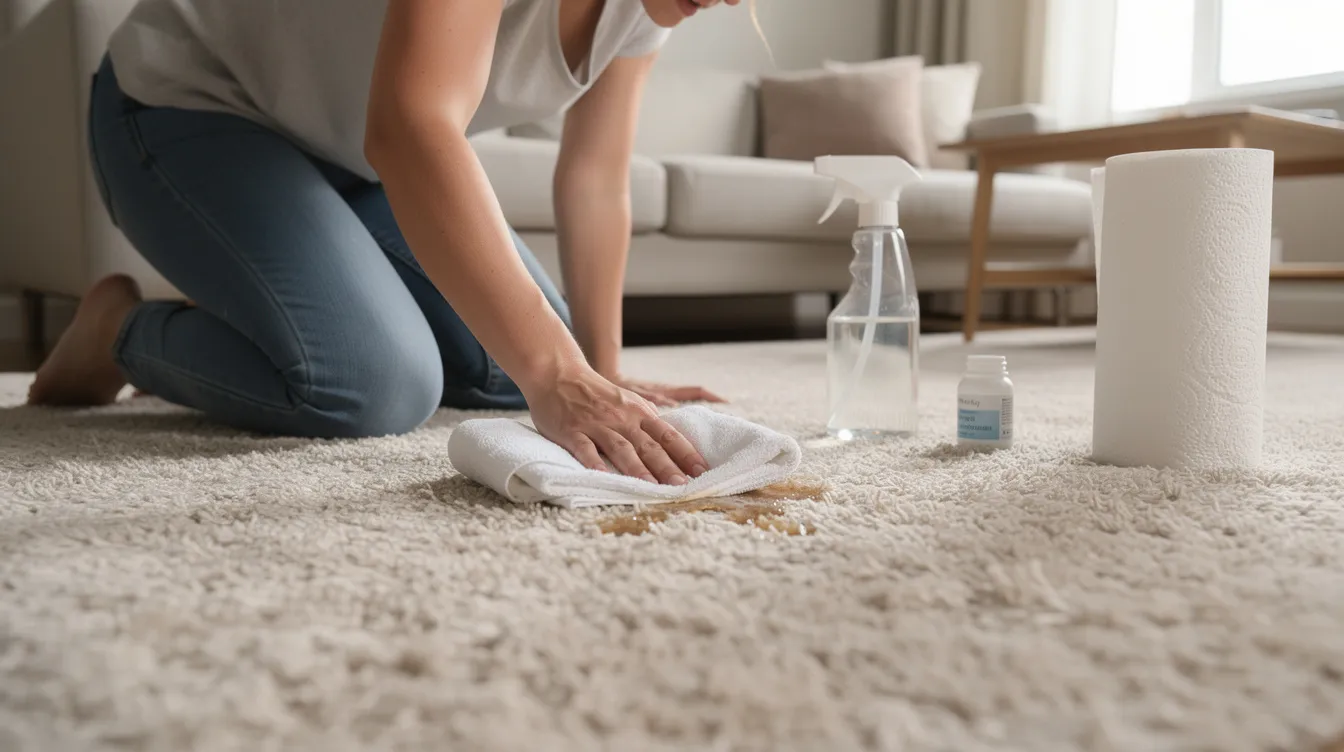
When you notice a spot, start with a quick three-step triage before reaching for any bottle of cleaner.
- Identify the spot. Is it water-based (coffee, juice, tea), oil-based (makeup, self-tanner), biological (pet urine), or unknown? The answer determines every step that follows.
- Blot, do not rub. Blot liquid stains immediately to prevent deeper penetration. Use a clean white cloth or paper towel and press straight down, working from the outside edges inward. Avoid scrubbing stains, because scrubbing can damage carpet fibers and push the spot deeper into the pile.
- Test colorfastness. Apply a small amount of your intended cleaner in a hidden spot (behind furniture, inside a closet). Wait a moment, then check the towel for dye transfer. If a spot seems especially hard to lift after testing, leave it alone.
If the spot is spreading despite blotting, you don’t know what caused it, or the stain involves dye, paint, or an unknown chemical, stop and contact a professional. Continued DIY work on these can set the stain permanently.
One safety note: keep children and pets away from any wet, treated area until it is fully dry, and keep hand soap nearby for cleanup.
The Most Common Pre-Guest Carpet Spots in Placer County
Here are the spots Placer County homeowners deal with most often before company arrives:
- Self-tanner: DHA (dihydroxyacetone) reacts with fibers through a Maillard reaction, forming brown melanoidins. Oil-based carriers make it cling. Heat or harsh chemicals set it fast. For a deeper walkthrough, look at our self-tanner spill removal guide.
- Makeup and foundation: Pigment plus oils settle into carpet fibers and resist water alone.
- Coffee and tea: Tannin-based stains that bond to fibers if treated with heat too early.
- Wine: Deep dye that wicks into backing and padding, sometimes reappearing after it looks gone.
- Pet marks: Urine, vomit, and feces require enzyme action to break down crystals that trap odors.
- Tracked-in dust and dirt: Dry Placer County summers push fine particulate into carpet pile, where it shows under daylight as dull shadowing on light-colored fibers.
Wildfire ash tracked indoors is thin and powdery. Once it gets damp, it leaves mineral residue that is difficult to remove, so vacuum ash dry before applying any moisture. Winter mud from rain and Sierra foothill runoff can also stain light carpets quickly if ground into the pile.
How Carpet Fibers Change Your Spot Strategy
Not every carpet responds the same way to a cleaner. Knowing your fiber type narrows the risk.
| Fiber | Key trait | pH caution |
|---|---|---|
| Nylon | Durable, resilient, good colorfastness | Avoid overly alkaline cleaners on surface-dyed nylon |
| Polyester | Resists water-based stains; crushes under heavy traffic | Vulnerable to oil-based stains like makeup and self-tanner |
| Olefin (polypropylene) | Resists mildew and sun fade | Performs poorly with alkaline over-wetting |
| Wool | Natural resilience, dirt-resistant | Requires neutral or slightly acidic cleaners; no bleach |
Wool is the most sensitive. Hydrogen peroxide, high heat, and alkaline products can cause browning, dye bleeding, or felting. Polyester handles water-based spills well but absorbs oils stubbornly.
Fiber ID tip: Pull a tiny fiber from an inconspicuous spot, snip it, and burn it safely. Wool smells like burning hair and leaves crushable ash. Synthetic fibers melt and drip. Also check the carpet’s material label, which is often printed on the backing near a wall edge.
When cleaning any carpet, remember that the pad and backing underneath can wick stains back up after treatment. Excessive water can push dirt into the carpet pad, creating a problem that lasts longer than the original spot.
What You Can Safely Do at Home Before Guests Arrive
An easy DIY decision framework saves time and prevents damage.
- Vacuum first. For surface dust and pet hair, a quick vacuum pass before any wet treatment makes a visible difference. Vacuuming regularly prevents carpets from deteriorating quickly.
- Blot the spot with a white cloth or paper towel. Never use colored cloths; dye transfer from the towel can leave a new stain.
- Apply a small amount of cleaner (a few drops of dish soap in cold water in a spray bottle works for many water-based spills). Test first.
- Rinse with plain cold water. Blot dry.
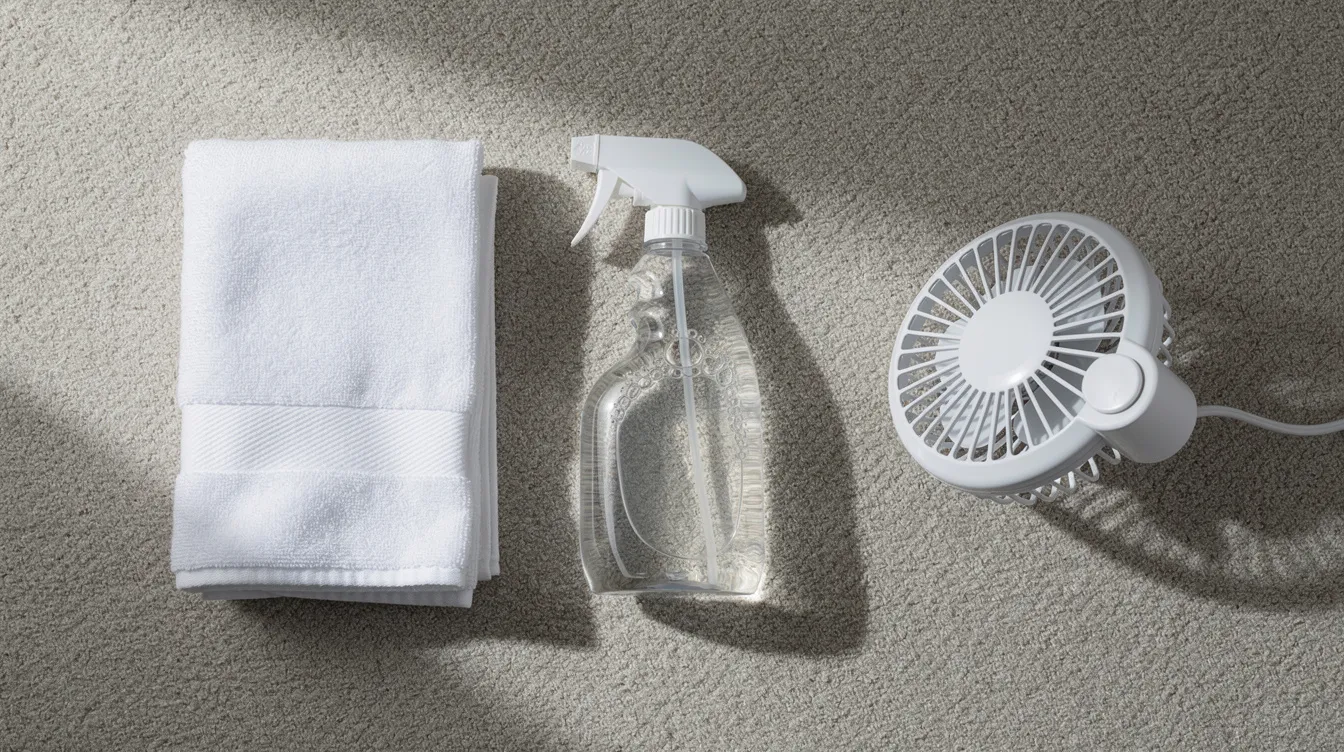
- Dry the affected area with fans or air conditioning.
Avoid over-wetting the carpet during cleaning processes. If you soak through to the padding, the pad can develop mildew, odors, and wicking rings as moisture dries outward. Don’t mix cleaning chemicals (bleach plus ammonia produces chloramine gas). Sprinkle baking soda over carpets to neutralize odors once the area is nearly dry, then vacuum it up.
Quick Fixes by Stain Type
Targeted treatments are effective for specific stains like pet urine and wine. Here are action-focused sequences:
Fresh water-based spills (juice, soda, coffee)
- Blot with dry white towels until no more liquid lifts.
- Spray a mild detergent solution (a few drops of dish soap in cold water), then blot from edges inward.
- Rinse with clear cold water, blot dry, and aim a fan at the spot.
Wine and tannin stains (wine, tea, coffee that has set)
- Blot, then dilute with cold water (spray or drop), continue blotting.
- Apply dish soap mixed with cold water. Let it sit for two to three minutes. Blot again.
- If color remains and your fiber allows it, apply a mix of 3% hydrogen peroxide and dish soap. Test first. Rinse thoroughly and blot dry.
Makeup and foundation
- Gently scrape off solids with the edge of a spoon or dull knife. Blot with a dry towel.
- Apply a small amount of isopropyl alcohol (for synthetic fibers) or mild detergent, working from edges inward. Blot.
- Rinse with cold water. Blot. Aim a fan at the area.
Fresh pet urine
- Blot as much liquid as possible.
- Apply an enzyme-based cleaner that penetrates to the pad. Enzyme cleaners break down pet messes at the molecular level. Let enzyme cleaners sit for up to 12 hours for best results if time allows. Choose a trusted brand formulated to neutralize odors, remove stains, and help deter pets from re-soiling the same spot.
- Extract excess moisture with a wet/dry vacuum or layered towels. Rinse, blot dry, and run a fan.
Enzyme-based cleaners break down organic stains, making them essential for any biological mess.
Fast-Dry Tactics to Be Guest Ready Fast
Drying speed determines whether your room is ready when the door opens.
- Aim high-output fans directly at the cleaned spot. Outdoor airflow speeds up drying after carpet cleaning, so open windows and doors when air quality allows (close them during wildfire smoke events).
- Use towel layering: place several layers of dry white towels over the spot, weight them with books or a flat object, and leave them for 30 minutes. Swap for dry towels and repeat.
- Choose low-moisture cleaners when drying time is critical. These use a fraction of the water and leave the carpet walkable in under an hour.
- Fast-drying methods help prevent mold and mildew growth, which matters in enclosed rooms or during Placer County’s occasional humid stretches.
When Professional Guest Ready Carpet Cleaning Is the Better Move
Sometimes a spot is beyond what a spray bottle and a paper towel can fix. Call a professional when you notice any of these, and remember that upholstery may need attention too when guests will notice the whole room:
- The stain is spreading despite blotting
- Odors persist after DIY treatment
- Sticky residue or a ring/halo forms as the area dries
- The stain chemistry is unknown (dye, paint, self-tanner that has set)
- The carpet is thick pile, wool, or another fiber you are unsure about
- Time before guests is tight and you cannot risk a wet carpet
Professional cleaning removes deeply embedded soil and odors that surface cleaning cannot reach. Surface cleaning only addresses visible dirt, not deep stains. A professional can complete a deep clean in a single visit, and deep-cleaning machines can refresh dull carpets that have lost their color under heavy foot traffic.
Hot water extraction flushes out oily residues and deep-seated allergens from the pad and backing, using water heated to 180 to 220 degrees Fahrenheit under pressure, followed by strong suction. This method pulls 95 to 98% of embedded soil. When the stain or residue is sticky or has formed a visible ring, extraction removes it completely.
Low-moisture encapsulation is preferable when drying time is the priority, using 1.5 to 3.5 gallons per 1,000 square feet versus much more for extraction. CRB (counter-rotating brush) agitation helps release heavy surface soil before extraction, especially on matted traffic paths. If you need same-day help, book early because schedules can fill quickly.
Professional cleaning also preserves flooring and furniture investments over time.
Traditional Steam Cleaning Versus Low-Moisture Options
The term “traditional steam cleaning” usually refers to hot water extraction. It delivers the deepest clean but comes with a drying trade-off: traditional steam cleaning can leave carpets wet for 12 to 36 hours in humid or poorly ventilated rooms. In Placer County’s dry summer air with fans running, that window compresses to a typical 2 to 4 hours.
Low-moisture cleaning uses significantly less water than traditional methods. Oxi Fresh, for example, is recognized as The World’s Greenest Carpet Cleaner and uses significantly less water than traditional cleaning methods. Oxi Fresh’s fast-drying process dries carpets in about one hour, and readers can learn more on the linked page. Dry extraction cleaning can save up to 90% compared to professionals who use full hot water extraction, though it trades some deep-soil removal for speed.
The risk with any method that leaves cleaning agents behind is “sticky rebound,” where residue re-attracts dirt within days. If your carpet cleaner does not rinse with pH-balanced water after treatment, residue will form, and the carpet will look dirty again quickly. For more detail, see our residue-free cleaning for guests page.
Schedule cleaning 2 to 3 days before guests arrive for optimal drying if you choose a traditional extraction method. For same-day needs, low-moisture is the practical choice.
For a breakdown of typical pricing and what drives costs, check out how carpet cleaning costs work.
Choosing a Local Carpet Cleaner for Same-Day Help
When you pick up the phone, ask these questions before booking:
- What method will you use (extraction, low-moisture, or a combination)?
- What is the expected dry time for my carpet type?
- Do you use a trusted brand of low-VOC solution?
- Are the technicians owner-operated and insured?
- What is included in the quoted price (stain treatment, furniture moving, stairs)?
Guardian Carpet Care is a family-owned, veteran-owned business where the owners, Dave and David, do the work. Same-day appointments are available when the schedule allows. Call today if your timing is tight. Book online at guardiancarpet.com or call (916) 547-0416.
Low-VOC cleaning solutions support health and safety, and eco-friendly cleaning products are safer for families and pets. Ask your carpet cleaner about the products they use, especially if you have pets, children, or people with sensitivities in the home. Eco-friendly cleaners can also help prevent mold and mildew growth by reducing chemical moisture trapped in the pad.
Protect Appearance and Indoor Air Before Guests Arrive
A quick checklist for the hour before your guests arrive:
- Vacuum high-traffic areas using a slow, overlapping cross-hatch pattern. This lifts more dirt than a single fast pass. Move lightweight furniture when vacuuming to improve cleaning effectiveness.
- Use a carpet rake to lift flattened fibers after vacuuming. It brings back the pile’s texture in traffic lanes and under furniture, and helps fluff the pile so worn paths look fresher.
- Remove pet hair with a rubber broom before vacuuming. Pet hair wraps around fibers, and standard vacuum passes miss a lot of it.
- Place clean mats at entrances to reduce incoming dirt from shoes and paws.
- Make sure area rugs are clean and aligned to spruce up the room before guests arrive.
- Check spots under natural light. Walk through the room and check each visible area. Treat small marks immediately.
- During wildfire smoke events, close windows and run AC or a HEPA filter instead of ventilating from outside.
For homes where dust, dander, or seasonal pollen are a concern, our What Dust in Carpet Means guide covers the bigger picture. Households with allergy-sensitive residents can also review our carpet and allergies guide for practical steps.
Regular vacuuming is essential to keep carpets clean between professional visits.
FAQ Section: Quick Answers Guests Commonly Ask
FAQ Section: Quick Answers for Common Hosting Story Scenarios
Which spots are safe to DIY? Fresh water-based spills (juice, soda, coffee), light surface dirt, and small pet marks on synthetic carpet are usually safe to handle at home if you blot, test, and rinse.
How to avoid setting a stain? Blot immediately. Avoid heat, avoid rubbing, work from outside edges inward, and do not over-wet the area.
Will spot treatment leave residue? If you do not rinse and blot until the water runs clear, surfactant or enzyme residue will stay behind and attract new soil. Rinse thoroughly every time.
Fastest safe way to dry a cleaned spot? Layer dry white towels over the spot, weight them down, aim a high-output fan at the area, and run AC or a dehumidifier. Open windows only when air quality is good.
When should I book same-day service? When the stain is large, the chemistry is unknown, odor remains after DIY work, the spot keeps returning, or you do not have enough hours for the carpet to dry before guests arrive. Guests may comment on lingering odor or visible spots even when you have gone nose-blind. Professional carpet cleaning should be performed every 3 to 6 months as a baseline to keep floors in good shape between events.
Local Logistics, Pricing Signals, and What to Ask on the Phone
The main cost drivers for professional carpet cleaning in Placer County are the size of the area, number of stains or spots, fiber type, soil level, pet odor treatment, furniture moving, stairs, and urgency (same-day versus scheduled). Ask about minimum charges and whether add-ons like stair cleaning or protectant application are included or extra. Professional cleaning can be completed in a single visit, so one scheduled appointment usually covers the whole home, including high-traffic rooms and nearby bathrooms when that fits the quote.
Clarify furniture moving charges up front. Some companies include moving lightweight pieces; others charge for it. The more detail you get on the phone, the fewer surprises on the invoice, and detailed questions now can make booking more straightforward.
For a full breakdown with local context, see how carpet cleaning costs work.
One Simple Call to Action
If a carpet spot has you second-guessing whether your home is ready, book online at guardiancarpet.com or call (916) 547-0416. Ask about same-day availability when time is short. Keep this guest-ready checklist where you can find it, and the next time the company is coming, you will know exactly where to start.


