


A carpet spot can look better right after treatment and still not be truly clean. Sometimes the improvement fades because of wick-back. Sometimes it is leftover cleaner. Sometimes the treated patch simply looks brighter than the surrounding carpet for a while.
That is where residue-free carpet cleaning matters. The goal is not just a quick visual lift. It is removing soil without leaving behind detergent film that can make carpet resoil faster.
This guide is built around one practical question: did the spotter actually clean the carpet, or did it mostly change how the fibers looked for a short time?
Compare the 3 Most Common Explanations
| What it is | What you may notice | What it suggests |
|---|---|---|
| Wick-back | The spot improves while damp, then darkens again as it dries | Soiling or staining may still be below the surface |
| Residue | The area feels tacky, stiff, or seems to grab dirt quickly afterward | Too much cleaner or poor removal may be part of the problem |
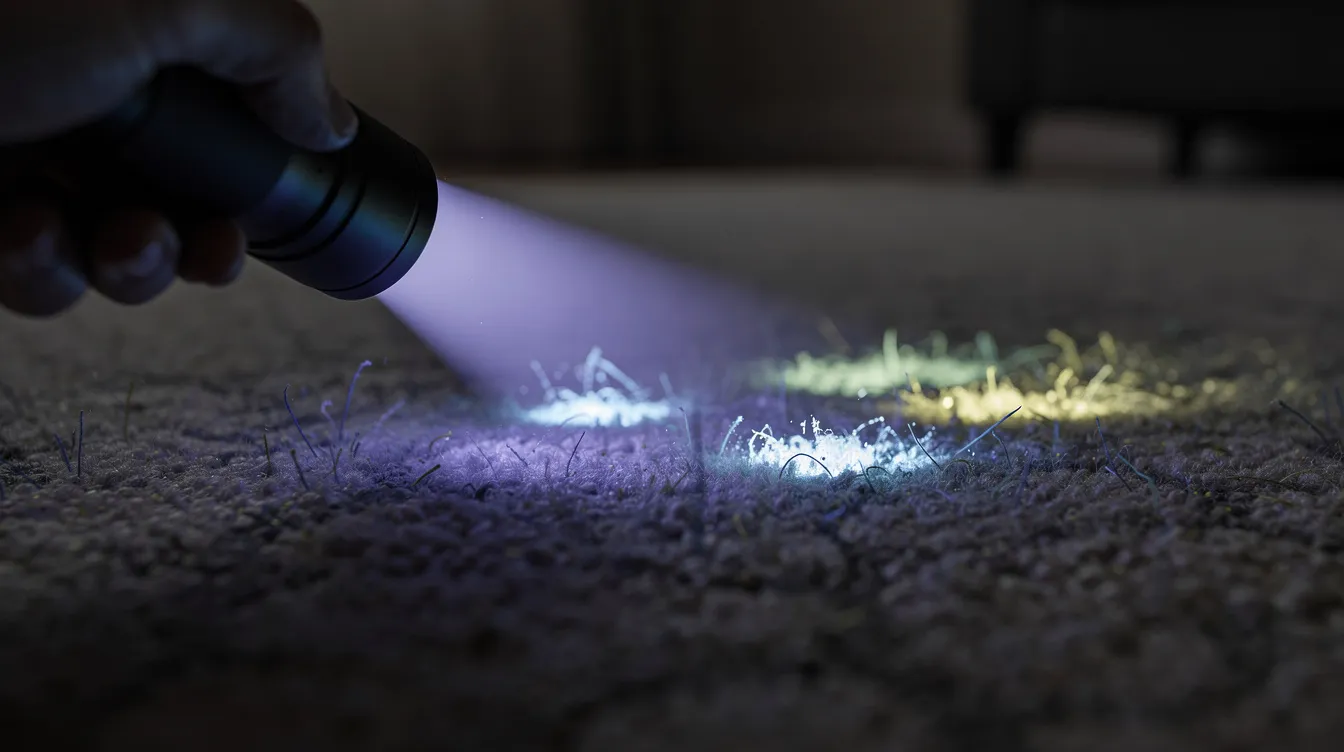
| Optical brightening | The treated patch looks unusually bright compared with nearby carpet | The product may have changed appearance more than condition |
The Carpet and Rug Institute separates optical brightener presence from cleaning and resoiling performance in its product evaluation criteria. In plain terms, a brighter-looking patch is not automatic proof that more soil was removed.
Why the First Look Can Mislead You
CRI’s carpet care guidance warns that some spot-cleaning products may leave detergent residue that causes carpet to quickly resoil. The same guidance also warns that some products may contain optical brighteners or have a pH above 10, which may distort carpet color and may affect warranty coverage.
So if one area suddenly looks cleaner than everything around it, pause before treating more of the room with the same product. A visual improvement is useful, but it is not the same as confirming a deeper clean.
A Simple Dry-Down Check
Before adding more cleaner, let the area dry fully and run this quick check:
- Look across the carpet in daylight. Does the area blend in, or does it stand out as brighter or more uneven than the surrounding pile?
- Feel the fibers. If the spot feels tacky, stiff, or crunchy after drying, suspect leftover cleaner.
- Watch what happens over the next day or two. If the area dulls again unusually fast, that points more toward residue, wick-back, unresolved deeper soil, or a combination than toward a successful cleanup.
When Not to Trust the Early Result
- The spot only looks improved while still damp.
- The treated area is brighter than nearby carpet.
- The carpet feels different there than everywhere else.
- You are tempted to re-spray the same place immediately.
If two or more of those are true, stop layering product. You will usually learn more from a full dry-down than from another quick application.
What to Do Next
| After drying, you notice… | Most reasonable takeaway | Next move |
|---|---|---|
| The area looks evenly better and feels normal | The spot treatment may have worked acceptably | Leave it alone and monitor |
| The area looks better but feels tacky or stiff | Possible leftover cleaner | Do not add more product; consider a small plain-water rinse test |
| The area looks brighter than nearby carpet | Possible optical brightening or uneven treatment | Do not use that spotter across a larger area |
| The same area darkens again after drying | Possible wick-back, residue, deeper soil, or a mix | Consider a more thorough rinse-focused cleaning |
A Small Plain-Water Rinse Test
If the area seems more sticky than dirty, a cautious homeowner can try a small plain-water rinse test on one section.
- Apply a small amount of plain water.
- Blot with a clean white towel.
- Remove as much moisture as you can.
- Let the area dry fully before judging it.
This is not a cure-all. It will not solve every wick-back problem or every deep-soil issue. But if the carpet feels more normal after drying, leftover cleaner may have been part of what you were seeing.
What Not to Do
- Do not keep stacking one cleaner on top of another.
- Do not use laundry detergent on carpet.
- Do not use automatic dishwashing detergent on carpet.
- Do not assume a brighter patch means the soil is gone.
CRI specifically says not to use laundry detergent for carpet spot cleaning, and its care guidance warns that some products can leave residue or create color-related problems.
When Professional Cleaning Makes More Sense
DIY spotting is reasonable for a small, fresh issue. It becomes less useful when the problem is no longer one isolated spot, or when the same visual cycle keeps repeating.
Professional cleaning is usually worth considering when:
- multiple areas feel sticky after earlier cleaning,
- traffic lanes dull again quickly,
- the carpet looks patchy after spot treatment, or
- you want a more complete rinse-and-extract reset instead of more experimenting.
If your bigger problem is rapid resoiling across the room rather than one suspiciously bright spot, see Guardian’s guide on why carpets attract dirt quickly after cleaning. For a broader homeowner overview, you can also read this residue-free carpet cleaning guide.
How Guardian Approaches Residue-Free Carpet Cleaning
Guardian Carpet Care’s public carpet cleaning page describes carpet cleaning focused on residue-free results, with no soapy residue left over and many jobs drying in about 2 to 4 hours depending on conditions.
For homeowners in Placer County, the practical takeaway is simple: if quick brightening keeps turning into quick dulling, the next question is usually not which stronger spotter to buy. It is whether the carpet needs a more complete cleaning approach that focuses on rinsing and soil removal, not just short-term appearance.
If you want help with residue-free carpet cleaning, book carpet cleaning with Guardian Carpet Care.


