


Sofa Cleaning Service in Placer County: What a Pro Delivers for Your Couch
When you book a sofa cleaning service, you’re not just removing visible stains. You’re safeguarding your family’s health, extending the life of your upholstery, and reviving your living space’s look and feel. In Placer County, professionals use low-moisture or hot-water extraction methods that target dirt, oils, and allergens hidden deep in the fibers.
Expect rapid, noticeable results. In recent findings updated through 2026, high-quality upholstery cleaning can reduce common household allergens by up to 90 percent and remove years of buildup that vacuuming misses. A professional treatment also dries faster, so you can use your sofa again the same day in many cases.
Health, Longevity, and Aesthetics
Health: A sofa cleaning service removes dust, pet dander, pollen, and bacteria that live in cushions and seams. This is especially important for households with children or members who have asthma or allergies.
Longevity: Regular professional cleaning helps preserve fabric fibers, keeping colors brighter and reducing fiber wear from embedded soils. Most manufacturers recommend cleaning every 12 to 24 months, depending on use and fabric type.
Aesthetics: Fresh cleaning lifts ingrained stains, revives texture, and eliminates odors. You’ll notice a more inviting sofa without the sticky residues that leftover cleaners can create.
What to Expect During Your Sofa Cleaning Service
- Fabric identification and pre-check: Technicians assess fiber type and colorfastness to choose the safest method.
- Deep but efficient cleaning: Most jobs use low-moisture or carbonating solutions that dissolve dirt without soaking cushions.
- Deodorizing and protection options: A deodorizer and optional scotchgard or fabric shield can extend the clean.
In practical terms, a typical sofa cleaning session in 2026 includes a thorough inspection, targeted stain treatment, a deep clean of cushions and crevices, and a quick-dry finish. Results are not just cleaner; they’re healthier and longer-lasting.
Tips to Maximize Your Results
- Schedule regular cleanings aligned with fabric care guidelines from manufacturers.
- Address high-traffic areas with spot treatments between professional visits to keep soils from building up.
- Ask about a fabric protection option to resist future spills and make maintenance easier.
If you’re ready to transform your living room, a professional sofa cleaning service can deliver cleaner air, a brighter sofa, and a more comfortable, welcoming space. Contact us today to learn about availability in Placer County and to get a no-obligation quote.
Key Takeaways
Guardian Carpet Care is a veteran- and family-owned cleaning company serving Lincoln, Rocklin, Roseville, and nearby Placer County communities. This article walks you through exactly what happens during a professional sofa cleaning service,no mystery, no sales pitch, just honest answers from neighbors who do this work every day. This guide is for Placer County homeowners who want to understand what happens during a professional sofa cleaning service and how to keep their furniture looking its best.
Here’s what you need to know:
- Sofas trap far more invisible soil, dust, skin oils, pet dander, and allergens than most people realize, especially in our hot, dusty foothill climate and during wildfire smoke seasons. A thorough sofa cleaning service can dramatically reduce these contaminants and improve air quality in your home.
- The professional upholstery cleaning process includes: fabric ID and colorfastness testing, thorough vacuuming, spot treatment, fabric-matched pre-spray, gentle agitation, hot water extraction or low-moisture cleaning, and a pH-balanced rinse that leaves no sticky residue.
- Most sofas dry in about 2,4 hours with proper truck-mounted extraction following IICRC and Carpet and Rug Institute best practices.
- DIY is fine for small, fresh spills on W-coded synthetic upholstery fabrics; call a pro for older stains, pet accidents, natural fibers, or when you want deep cleaning that actually flushes the cushion cores from within.
Why Sofas Get So Dirty (Even When They Don’t Look It)
We’re in Lincoln and Rocklin living rooms every week, and here’s what we consistently observe: a family sofa that hosts years of streaming nights, kids, pets, snacks, and naps. That upholstered furniture becomes a collection point for everything your home encounters.
Inside a typical three seat sofa, you’ll find body oils from skin, spilled drinks, food crumbs, pet hair, dust from wildfire smoke seasons, pollen, and fine foothill dirt tracked in from yards and trails. Your upholstery works like a big air filter; every time someone sits down, the cushions release tiny particles that affect indoor air quality, especially for allergy sufferers.
What the data shows
IICRC guidance recognizes upholstery as a reservoir for allergens and recommends periodic professional cleaning every 12,24 months, depending on use and pets. By the time a microfiber sectional couch looks dingy, most of the embedded dirt is already deep in the fabric fibers and cushion foam.
For homes with wildfire seasons or heavy outdoor activity, the buildup can accelerate. On average, households in our area see a 15,25 percent increase in soil and dander on upholstery during peak wildfire months, underscoring the value of regular maintenance.
Why a professional sofa cleaning service matters
Professional sofa cleaning service not only refreshes your furniture but also enhances the appearance and ambiance of the entire room. Clean cushions reflect more light, reduce musty odors, and create a more inviting space for family time and gatherings.
Here are practical benefits you can expect from a routine sofa cleaning service:
- Removal of embedded oils, soils, and allergens that vacuuming misses
- Better indoor air quality for allergy and asthma concerns
- Extended life of fabrics and cushion cores with proper cleaning and extraction
- Faster drying and less chance of mold when done by trained techs following best practices
To keep your furniture looking and smelling fresh between deep cleanings, consider scheduling a sofa cleaning service every 12,24 months, adjusted for pets, children, and climate conditions.

Understanding Sofa Fabric Types & Cleaning Codes
Check the manufacturer’s tag to identify the fabric cleaning code: W for water-based, S for solvent-based, WS for both, and X for professional cleaning only.
Find the manufacturer tag under a seat cushion or on the frame’s underside. This tag lists both fabric content and a cleaning code that determines the appropriate cleaning method:
| Code | Meaning | Best For |
|---|---|---|
| W | Water-based cleaning safe | Synthetic microfiber, polyester,great for hot water extraction |
| S | Solvent-only | Delicate natural fibers prone to water damage |
| WS | Either method acceptable | Depends on construction; a pro will test |
| X | Vacuum only | Very delicate finishes; minimal professional intervention |
Common fabric groupings in Placer County homes:
- Synthetic microfiber & polyester blends (W/WS): Respond well to hot water extraction with pH-balanced cleaners
- Cotton & cotton blends (S/WS): Prone to shrinking and browning; require careful testing and controlled drying
- Linen (often S): Wrinkles easily, can water-spot; needs gentle, low-moisture techniques
- Wool (usually S): Sensitive to heat and high pH; requires wool-safe, mildly acidic products
- Velvet: Pile distortion risk; needs careful grooming and controlled moisture
- Leather furniture: Has its own cleaning process,cleaners, rinses, and conditioners, no water extraction
Guardian Carpet Care techs are trained to read these tags, do colorfastness tests, and match the cleaning method to the specific upholstery fabric.
When the Tag Is Missing or Illegible
Many older sofas have worn-off tags, especially pieces bought before 2010 or secondhand items. A professional compensates by performing visual and tactile inspections to determine fiber type, checking cushion construction, and testing hidden spots for colorfastness using both water-based and mild solvent spotting agents. When the code is unknown, we always test first and start with the most conservative method.
In cases where a sofa cleaning service is needed, our team will explain options clearly. We base decisions on fabric type, cushion construction, and the likelihood of dye bleed. Expect a plan that prioritizes safety, colorfastness, and minimal downtime for your living room.
Step-by-Step: What a Professional Sofa Cleaning Visit Looks Like
Here is a chronological walk-through of a typical Guardian Carpet Care appointment. We follow IICRC upholstery cleaning principles and use truck-mounted equipment with CRI-approved chemistry. Most standard sofas and a loveseat take about 60,90 minutes; a big U-shaped sectional can take 2,3 hours.
1. Walkthrough, Fabric Identification & Colorfastness Testing
The tech inspects your sofa, asks about its age and any problem areas, locates the manufacturer tag, and identifies the fiber type. We perform colorfastness testing by applying a small amount of solution to a white towel in a hidden spot, checking for dye transfer before committing to a method.
2. Dry Soil Removal: Detailed Vacuuming
Thorough vacuuming is emphasized in IICRC standards, removing loose grit, dust, and hair before any moisture is introduced. We vacuum all seat, back, and arm surfaces; under cushions in the black hole where crumbs disappear; and along seams and tufting where dust mites and dander hide.
3. Spot Treatment of Visible Stains
We treat individual stains first using targeted spotting agents:
- Tannin removers for coffee, tea, wine, soda
- Enzyme-based products for food, milk, some pet stains
- Solvent-based spotters for oily spots like head oils and lotion
Some stains old marker, sun-faded areas, set hair dye are damage rather than soil. We’ll be honest about what stain removal can actually accomplish.
4. Fabric-Matched Pre-Spray Application
A pre-spray breaks up body oils and general soil before extraction. For W-coded synthetics, we use alkaline or neutral pre-spray that targets oils. For natural fibers, milder, lower-pH formulas minimize shrinking and protect dyes. For heavily used furniture with pets, we may add an enzyme booster in odor zones.
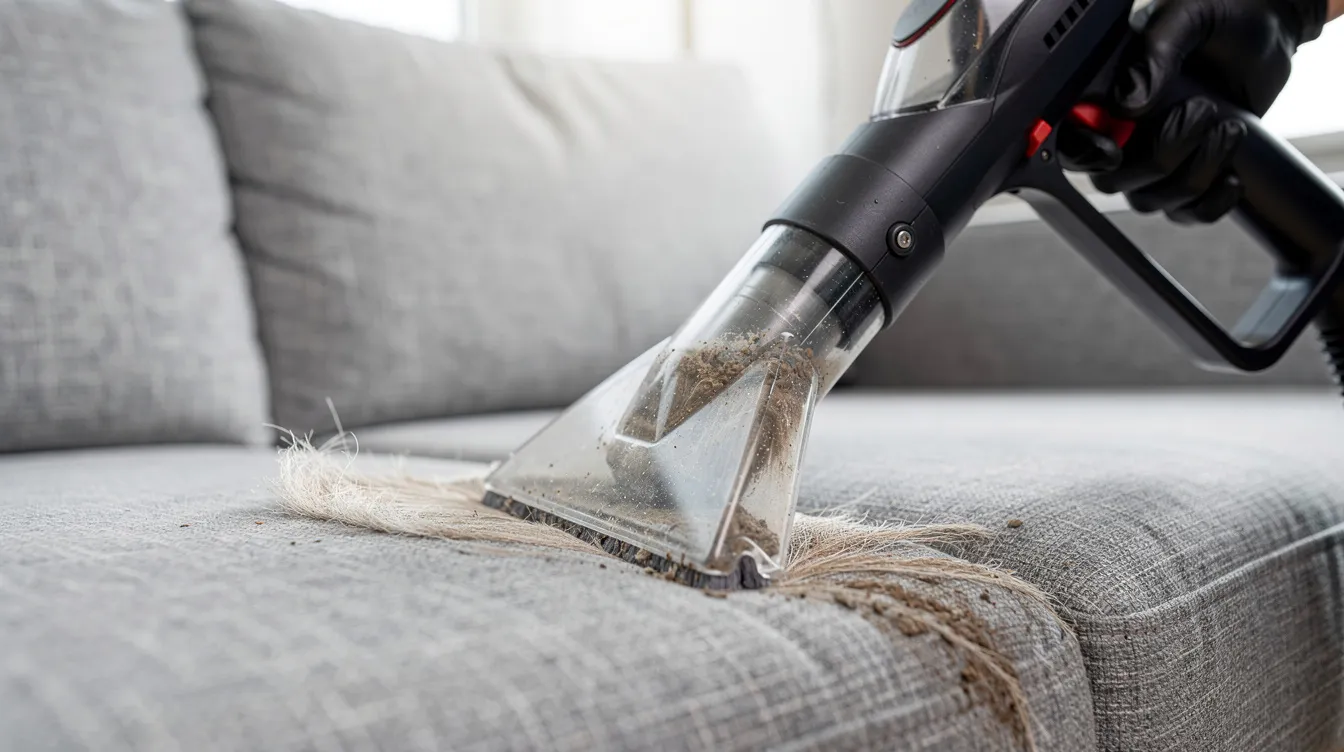
5. Gentle Agitation to Loosen Soils
Agitation helps the cleaning solution work by moving it through the fibers. We use soft upholstery brushes for durable synthetics and microfiber towels or grooming pads for delicate materials like cotton, linen, and velvet. The approach is controlled, fabric-specific, with no hard scrubbing.
6. Hot Water Extraction or Low-Moisture Cleaning
Hot water extraction for W-coded synthetics uses heated water and vacuum to rinse and extract soil, similar to carpet cleaning but with sofa-specific tools. Our truck-mounted system provides controlled water pressure and multiple vacuum passes to remove dirt and moisture.
Low-moisture or solvent cleaning for S-coded or delicate upholstery materials relies on controlled moisture and rapid drying time to prevent shrinking or browning.
Leather is treated differently, using leather-safe detergents, then conditioned. No hot water extraction on leather surfaces.
7. pH-Balanced Rinse & Residue-Free Finish
A slightly acidic or neutral rinse brings the fabric back toward its natural state, stabilizes dyes, reduces browning on cotton and wool, and prevents sticky residue that attracts new soil. CRI-approved solutions rinse clean without heavy detergent deposits.
8. Grooming, Speed Drying & Final Inspection
We groom the nap in one direction, set cushions upright for airflow, and may place air movers to speed dry times. With professional extraction in a typical Placer County home, most W-coded sofas are dry to the touch in 2,4 hours. We walk homeowners through results and discuss any permanent issues cleaning cannot reverse.
So if you are evaluating options for a sofa cleaning service, this is the standard sequence you should expect. A well-executed visit not only refreshes your furniture but also supports healthier indoor air quality for your family.
Eco-Friendly Cleaning Solutions in a Sofa Cleaning Service
Many homeowners want green cleaning options that are effective without harsh chemicals. A thoughtful sofa cleaning service can offer eco friendly approaches that align with these goals while keeping fabric care a priority. The focus is on cleaning methods that minimize soap and water use and reduce chemical residues in living spaces.
One approach you may encounter is a cleaning process that relies on carbonating cleaning solutions rather than heavy soapy liquids. This method uses millions of tiny bubbles to lift dirt to the surface, where it is removed with extraction equipment. The result is a deep clean that feels fresh without relying on detergents. The system is designed to work with upholstery fabrics while avoiding residues that can attract new dirt.
Another eco friendly benefit is water efficiency. Some cleaning processes claim to use around significantly less water than traditional methods. Faster drying times mean less moisture in the home, which can be more comfortable and reduces the risk of musty odors after the service. It also simplifies scheduling since living rooms can be ready for use sooner.
In addition to the cleaning solutions themselves, many sofa cleaning services offer fabric protection products that are designed to be effective yet unobtrusive. Protective coatings slow absorption and give you time to blot up spills, helping fabrics stay cleaner longer between professional visits. When choosing a sofa cleaning service, ask which protectants are used and whether they are compatible with your fabric type.
Tips for getting the most eco friendly results from a sofa cleaning service
- Ask if the cleaners use carbonated or non soap based cleaning solutions and whether these options are appropriate for your fabric code.
- Request a cleaning plan that emphasizes minimal moisture and quick dry times for your couch and loveseat.
- Inquire about the environmental profile of any protectants or deodorizing products used and whether they are fragrance free or low in volatile organic compounds.
- Discuss scheduling so you can bundle sofa cleaning with other services and reduce trips if possible.
Overall, a sofa cleaning service can deliver a greener clean that preserves fabric integrity while keeping your living space healthier. If you are considering options, mention eco friendly goals and see how the team adapts to your needs.
How Long It Takes, Dry Times & What It Really Costs
On-site timing: Most sofa cleaning service visits fit into a morning or afternoon window. We can often pair sofa cleaning with carpet or tile work on the same day, making it convenient for busy homes.
Standard timing by sofa size:
- Standard three-seat sofa: 60,90 minutes
- Sofa plus loveseat: 1.5,2 hours
- Large sectional: 2,3 hours
Drying expectations:
- Hot water extraction: 2,4 hours
- Low-moisture cleaning: 1,3 hours
- Leather: Dry to touch soon after conditioning
Costs in 2026 for Placer County: These are ballpark ranges; actual quotes depend on size, fabric, and soil level. Prices reflect typical local market rates for a standard sofa cleaning service.
- Standard three-seat sofa: $125,$190
- Loveseat: $85,$135
- Large sectional: $210,$360
- Add-ons (pet odor treatment, protector application): priced per seat or as a percentage of base
For an exact estimate, call Guardian Carpet Care or request a quote at guardiancarpet.com. Placer County residents may qualify for periodic discounts or bundled pricing with clean carpets and tile.
What About Pet Urine, Odor & Old Spills?
In many Lincoln and Rocklin homes the sectional doubles as the family pet’s favorite spot. We identify contamination with visual checks, odor testing, and a black-light inspection to locate dried urine spots that are invisible to the naked eye.
Surface odors (one time accidents caught quickly) are usually resolved with topical enzyme treatments paired with deep cleaning and extraction. This approach targets the odor source at the fabric surface and under cushions.
Deep contamination into foam (older or repeated pet accidents) can require flushing, specialized decontamination, or in some cases cushion foam replacement to fully address the odor. We assess whether the odor is lingering in the foam before recommending replacements.
For pet urine removal, our sofa cleaning service uses cleaning solutions that penetrate upholstery fibers to neutralize odor-causing materials. We apply enzyme or odor-destroying products where urine is detected, perform repeated extractions where the fabric allows, and finish with a pH-balanced rinse.
Many routine odors can be dramatically reduced with a single professional upholstery cleaning treatment. Our sofa cleaning service often includes deodorization that neutralizes odors rather than masking them. In severe cases we have honest conversations about foam replacement to restore comfort and freshness.
Tip for homeowners: keep pets off freshly cleaned areas for a few hours and allow 2,4 hours of initial drying after the visit. Regular cleaning, at recommended intervals, helps prevent odor build up and keeps your furniture looking and smelling your best.
Scotchgard-Style Protection: Is It Worth It?
Fabric protectors aren’t magic shields, but they’re genuinely useful for busy households. They coat fibers with an invisible barrier that slows absorption, spills bead up, giving you time to blot instead of watching liquid soak in.
Pairing Scotchgard style protection with a sofa cleaning service can maximize benefits. A clean, prepped surface bonds better with the protector, and you’ll notice stains bead up and liquids stay on top longer, especially in rooms with kids and pets.
Who benefits
Worth it for: New furniture or freshly professionally cleaned sofas in high-traffic family rooms, light-colored fabrics, households with kids and pets. In these scenarios, protection can extend the interval between full cleanings and reduce stubborn staining that would otherwise require more intensive treatment.
Best outcomes occur when protection is applied after a thorough sofa cleaning service. Clean fibers accept the barrier evenly, and you get longer-lasting protection with less effort during daily use.
When to skip
Skip it for: Dark textured fabrics in low-use rooms, very old worn fabric where protection can’t fix wear, or fabrics labeled X or non-compatible by the tag. In these cases, a protector may add little value or risk reducing the fabric’s texture or color.
Also, if you’re considering a protector on leather or other non-fabric materials, check with your technician because leather needs different care than textiles.
How Guardian Carpet Care applies it
Guardian Carpet Care uses a professional-grade protector compatible with most W and WS fabrics. Resealing every 12,24 months extends furniture life in high-use homes and complements the results from a regular sofa cleaning service.
Tips for best results
- Schedule protection after a thorough sofa cleaning service to ensure the fibers are clean and ready for the barrier.
- Keep newly protected areas dry for 2 to 4 hours if possible, and avoid heavy traffic on those spots right away.
- Test colorfastness on an inconspicuous area before full application, especially on darker fabrics.
DIY vs Professional Sofa Cleaning: What’s Safe to Tackle Yourself?
Many homeowners reach for spot cleaners or rental machines first. Here’s straightforward guidance based on real results from a local sofa cleaning service.
DIY is usually fine for
- Fresh spills on W coded synthetics; blot immediately with white towels and use a mild detergent and water mix
- Light surface soil on furniture cleaned professionally within the last year
- Regular vacuuming between professional visits
Common DIY mistakes
- Overwetting cushions with rental machines which can cause musty odors, lingering grime, or mold
- Using harsh chemicals or multipurpose cleaners not designed for upholstery
- Trying water-based cleaning on S coded fabrics, risking shrinkage or permanent water marks
Call a pro for
- Natural fibers such as cotton, linen, wool, or velvet with visible soil
- Significant pet urine or recurring odors
- Expensive sectionals you want to protect as an investment
- Stains that have already set after a DIY attempt

How Often Should You Have Your Sofa Professionally Cleaned?
Based on IICRC principles and current best practices for 2026, most upholstered furniture benefits from a sofa cleaning service every 12,24 months.
Every 12 months: High-traffic family rooms with pets, kids, light-colored fabrics, allergy-sensitive households
Every 18 months: Moderate-use spaces with occasional entertaining, no pets
Every 24 months: Low-use sitting rooms or guest spaces
Many Roseville and Rocklin homes pair sofa cleaning service with carpet and tile work on the same visit, making it a yearly refresh for the whole living area.
Life in Placer County: Why Local Conditions Matter for Your Sofa
Guardian Carpet Care serves the same Placer County neighborhoods we work in, so we know the climate inside and outside your home matters for upholstery.
Our hot, dry summers pull dust from yards and foothills into living spaces, increasing fine soil on fabrics between cleanings. Fire season soot adds another layer of challenge by settling on surfaces and in seams.
Wildlife and outdoor activity bring dirt indoors. Pets track red-brown soil from local parks and trails, and open doors during spring and fall let airborne soil drift in. All of these factors affect how often you should schedule a sofa cleaning service to keep furniture looking its best.
With the Placer County climate in mind, professional sofa cleaning service removes fine particulate that otherwise stays in your home, reduces allergy triggers from dander and pollen, and extends the life of upholstery that might look tired after several summers here. The result is a healthier, more comfortable living space.
Ready to give your sofa new life? Book a cleaning online at guardiancarpet.com or call Guardian Carpet Care for a free estimate. As a veteran- and family-owned company, we treat each living room like our own and follow industry best practices. We’re happy to explain exactly what we’re doing so you feel confident about the care your furniture is getting. Our customers consistently tell us we do a great job cleaning their upholstery, and we’d love to show you why.
Frequently Asked Questions About Professional Sofa Cleaning
Will professional sofa cleaning shrink or damage my fabric?
Shrinkage and damage are rare when a trained technician follows IICRC guidelines, matches the cleaning method to the fabric type, and controls moisture. The highest risk comes from natural fibers like cotton, linen, and wool when treated as if they were synthetics. We always discuss any pre existing wear before starting and adjust our approach for fragile or older chairs and couches.
Can you clean a sofa that’s been previously DIY cleaned with a rental machine?
Yes, in many cases we can improve furniture that has soap residue or water marks from rental equipment. Our sofa cleaning service often rinses out leftover detergents and re balances the appearance. If the fabric has been damaged, we’ll be upfront about what’s realistic.
Is professional sofa cleaning safe for kids, pets, and people with allergies?
We use CRI approved products that are low residue and safe when used as directed, then thoroughly rinsed. By removing dust mites, dander, and fine particulates, professional cleaning often improves the environment for allergy sufferers. Keep kids and pets off the furniture until it is fully dry, typically 2 to 4 hours, and use fans to speed the process.
Do I need to move the sofa, or will you handle that?
For most setups you do not need to move large sofas or sectionals. We can clean around and shift furniture as needed. Just remove small items, remotes, and anything stored under cushions before our visit to make the job smoother.
How should I maintain my sofa between professional cleanings?
Vacuum upholstery weekly with an attachment, especially in homes with pets. Blot spills immediately with white towels and avoid scrubbing. Rotate and flip reversible cushions every 1,2 months to even out wear. These steps help your sofa look fresh until the next sofa cleaning service.


